How to Increase Your Luck in Life
Success is never pure luck or pure skill — ancient Chinese philosophy splits luck into three forces, and while one is totally outside your control, the other two can be deliberately built up to make yourself luckier over time.
- People told to count photos in a newspaper: self-rated lucky people noticed a hidden note saying "stop counting, there are 43 photos" and a second note offering £100 far more often than self-rated unlucky people
- In a coffee shop with money planted on the floor and a successful businessperson seated nearby: lucky-rated people found the money and struck up the conversation far more often, while unlucky-rated people just sat alone and noticed nothing
Wiseman's conclusion: luck perception is a skill people can be trained to improve, which then produces genuinely better outcomes.
- Ancient Greeks personified luck as the fickle goddess Tyche, who explained bad things happening to good people with no reason given
- Romans carried this on as Fortuna, the root of the word "fortune"
- Boethius, imprisoned and later executed, described life as a wheel of fortune you spin and must simply accept — a fatalist view with no agency
- Medieval Christianity replaced fortune with God's will, treating any attempt to steer your own outcome as defying God
- Machiavelli compared fortune to a raging river: uncontrollable at flood tide, but manageable with levees and canals once it calms
- The Enlightenment brought probability theory, useful for risk assessment but still unable to resolve questions of fairness or guilt
- Heaven luck: the birth lottery — the family, country, and traits you're born with, completely outside your control
- Earth luck: the environment and systems you move through, like living in a dynamic city full of opportunities versus a small homogeneous town — a macro decision that shapes hundreds of smaller ones
- Human luck: your actual decisions and how well you adapt to the situations you're handed
In poker terms: heaven luck is the cards you're dealt, earth luck is the table you choose to sit at, and human luck is how well you play the hand — and professional players say the biggest decision is which table you sit at.
no stats — empty array
You got the sauceThis is the introductory chapter of a longer podcast episode, and its history lesson and framework are fully captured here; the practical exercises for building luck come in later chapters not included in this video.
Productivity & Self-Improvement
This works on every video on YouTube. Hover a thumbnail, get the whole video as a short read — free, no sign-up.
Add Ketchup to Chrome I was scared to start my business until I read this book. (now it makes $200K/yr)
 4 Books That Changed My Life
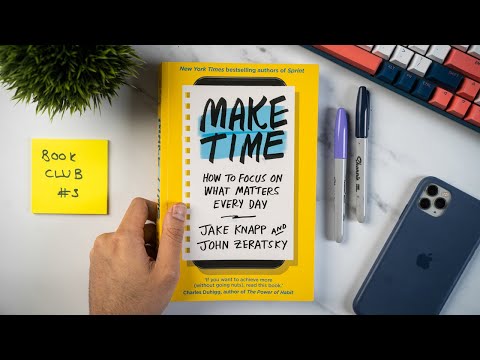 My Favourite Productivity Book of All Time